Explore the causes, symptoms, diagnosis, and innovative treatment options for spinal cord injuries, with expert insights from Dr. Bhaskar and advanced care at Accesscure.Expert insights from Dr. Bhaskar and specialized rehabilitation at Accesscure
Introduction
Spinal cord injuries (SCIs) are among the most devastating medical conditions, leading to partial or complete loss of sensory and motor function below the level of injury. These injuries can drastically change a person’s life, affecting their mobility, autonomy, and quality of life. The complexity of spinal cord injuries requires a multidisciplinary approach involving neurologists, physiotherapists, psychologists, and rehabilitation experts.
Dr. Bhaskar, one of the leading neurorehabilitation experts in India, has made significant strides in the holistic management of spinal cord injuries at Accesscure, a center known for its cutting-edge, patient-centered care. In this article, we will explore spinal cord injuries in depth—covering the causes, types, symptoms, diagnostic methods, treatment protocols, recovery journey, and life after injury.
Table of Contents
- What is a Spinal Cord Injury?
- Anatomy of the Spinal Cord
- Types of Spinal Cord Injuries
- Causes and Risk Factors
- Signs and Symptoms
- Diagnosis of Spinal Cord Injuries
- Emergency Management
- Treatment and Rehabilitation
- Role of Dr. Bhaskar and Accesscure in Recovery
- Life After a Spinal Cord Injury
- Psychological and Social Impact
- Assistive Technology and Innovations
- Preventive Measures and Awareness
- Real-Life Recovery Stories
- Conclusion
1. What is a Spinal Cord Injury?
A spinal cord injury occurs when there is damage to the spinal cord, either through trauma (like accidents or falls) or non-traumatic causes (such as tumors or infections). The spinal cord is a vital part of the central nervous system, transmitting messages between the brain and the rest of the body. Any disruption can impair motor, sensory, or autonomic functions.
There are two main classifications:
- Complete SCI: Total loss of function below the injury.
- Incomplete SCI: Some motor or sensory function remains below the site of injury.
2. Anatomy of the Spinal Cord
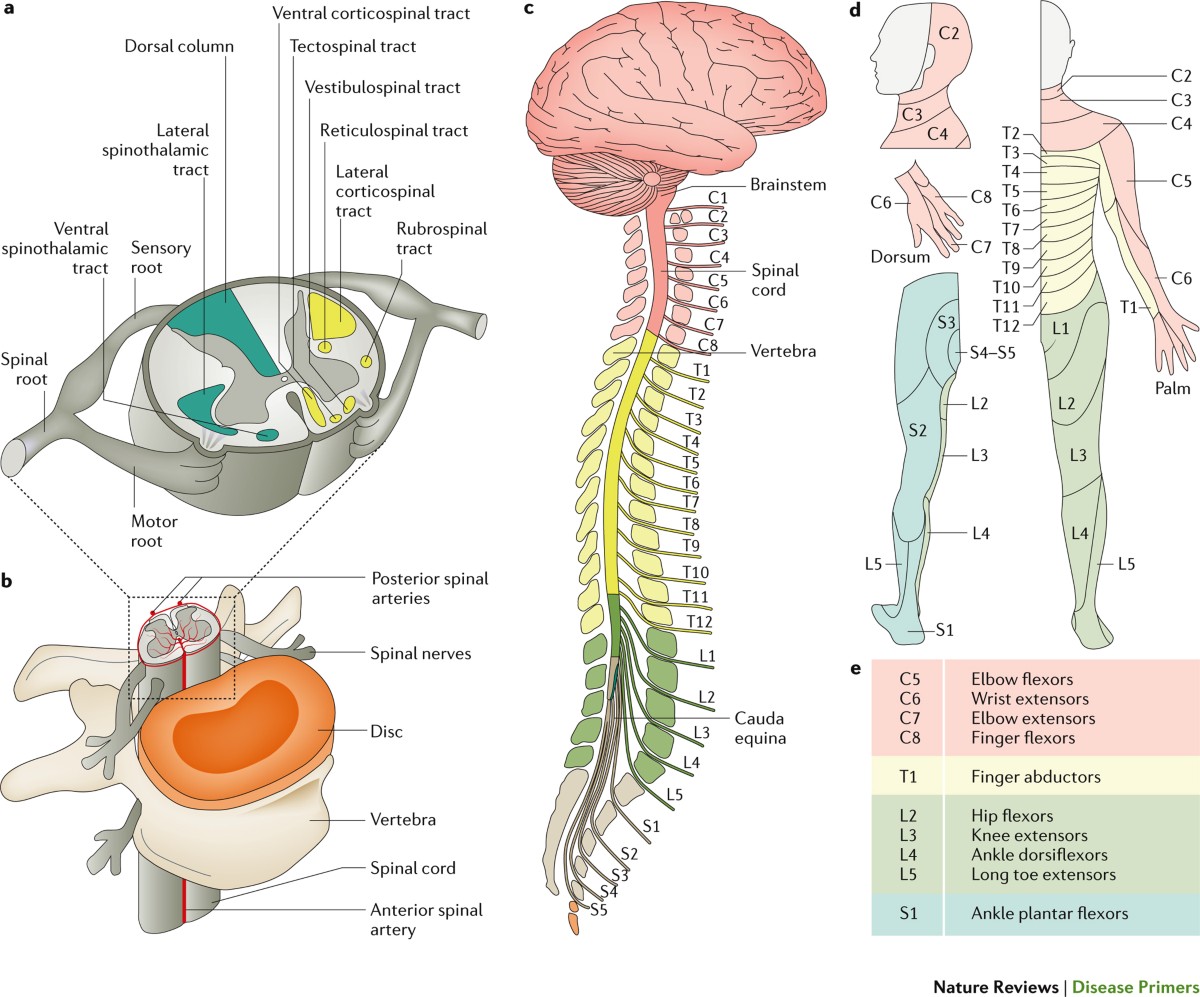
Understanding the spinal cord’s anatomy helps clarify how injuries affect the body. The spinal cord is divided into regions:
- Cervical (C1-C8) – Controls the neck, arms, and diaphragm.
- Thoracic (T1-T12) – Controls the chest and abdomen.
- Lumbar (L1-L5) – Controls the hips, legs, and lower abdomen.
- Sacral (S1-S5) – Controls the bowel, bladder, and sexual functions.
Injury level correlates directly with the functional loss experienced.
3. Types of Spinal Cord Injuries
a. Traumatic SCI
Caused by external physical impact:
- Motor vehicle accidents
- Sports injuries
- Falls
- Violence (gunshots, stabbings)
b. Non-Traumatic SCI
Due to medical conditions:
- Tumors
- Infections like tuberculosis or meningitis
- Degenerative diseases
- Autoimmune diseases
4. Causes and Risk Factors
Common Causes
- Road accidents (40-50%)
- Falls from height (20-30%)
- Sports injuries (10%)
- Violence (10%)
- Medical or surgical complications
Risk Factors
- Age (young adults 16–30 and seniors above 65)
- Males are more prone (approx. 80% of cases)
- High-risk activities
- Underlying health conditions (osteoporosis, arthritis)
5. Signs and Symptoms
Symptoms depend on the severity and location of the injury.
Motor Symptoms
- Loss of movement
- Weakness or paralysis
- Muscle stiffness or spasms
Sensory Symptoms
- Numbness or tingling
- Loss of sensation (touch, pain, temperature)
Autonomic Symptoms
- Difficulty breathing (if injury is high cervical)
- Loss of bladder and bowel control
- Sexual dysfunction
- Blood pressure instability
Red Flags
- Extreme pain or pressure in the neck/back
- Weakness or incoordination
- Loss of consciousness after trauma
6. Diagnosis of Spinal Cord Injuries
Prompt diagnosis is crucial. Dr. Bhaskar and his team at Accesscure use state-of-the-art tools and a precise clinical workflow.
Diagnostic Tools
- Neurological exam (ASIA scale)
- MRI – Detects soft tissue damage and compression
- CT scan – Evaluates bone injuries
- X-rays – Rule out fractures
- Electromyography (EMG) – Measures electrical activity of muscles
7. Emergency Management
Initial care is life-saving. Accesscure follows internationally recognized protocols:
- Immobilize the spine immediately
- Ensure airway, breathing, circulation (ABCs)
- Administer high-dose steroids (if applicable)
- Transport with spinal board and collar
- Prevent secondary complications like hypoxia or hypotension
8. Treatment and Rehabilitation
a. Acute Treatment
- Surgical interventions to relieve pressure or stabilize the spine
- Medication (anti-inflammatory, pain relievers, muscle relaxants)
- ICU monitoring for high cervical injuries
b. Rehabilitation
Under the guidance of Dr. Bhaskar, rehabilitation at Accesscure follows a patient-centered, multi-disciplinary model:
- Physiotherapy: Strengthening, balance, and gait training
- Occupational therapy: Improving ADLs (activities of daily living)
- Hydrotherapy: Aquatic exercises for better mobility
- Functional electrical stimulation (FES): Muscle activation
- Bladder and bowel training
- Speech therapy (if needed)
- Vocational training for reintegration
Dr. Bhaskar’s motto at Accesscure: “Not just surviving, but thriving post-injury.”
9. Role of Dr. Bhaskar and Accesscure in Recovery
Accesscure is India’s leading neuro-rehabilitation center, and Dr. Bhaskar is its visionary. With his expertise, patients benefit from:
- Personalized recovery plans
- State-of-the-art robotics and neurotechnology
- Empathetic psychological support
- Family counseling and education
- Regular assessments and modifications
10. Life After a Spinal Cord Injury
Rebuilding life after an SCI is challenging, but not impossible. With proper rehabilitation, assistive technology, and a supportive environment, many individuals regain independence and purpose.
a. Independent Living
- Adaptive home modifications: Wheelchair ramps, smart homes, adjustable beds
- Mobility aids: Manual and powered wheelchairs, walkers, crutches
- Personal care training: Dressing, grooming, feeding assistance
b. Return to Work or Education
Accesscure provides vocational rehab and digital skill training, allowing patients to:
- Pursue remote work opportunities
- Rejoin school/college with accommodations
- Learn new career-relevant skills
c. Social Reintegration
Dr. Bhaskar emphasizes that social inclusion is a crucial marker of recovery. Accesscure conducts:
- Community engagement programs
- Peer mentorship groups
- Recreational therapy (sports, music, art)
11. Psychological and Social Impact
Spinal cord injuries impact mental health deeply. Depression, anxiety, PTSD, and social isolation are common but manageable with early intervention.
Psychological Support at Accesscure
- One-on-one psychotherapy sessions
- Cognitive Behavioral Therapy (CBT)
- Family counseling
- Support groups to share lived experiences
Dr. Bhaskar believes healing the mind is just as essential as healing the body.
Social Challenges
- Stigma and discrimination
- Loss of financial independence
- Changes in family dynamics
- Reduced social interaction
Empowerment is key — Accesscure focuses on building emotional resilience, self-worth, and confidence.
12. Assistive Technology and Innovations
Modern innovations have revolutionized SCI rehabilitation. At Accesscure, cutting-edge tech is used to promote maximum recovery:
a. Robotics and Exoskeletons
- Help paraplegics walk again
- Improve gait and posture
- Enhance muscle strength
b. Virtual Reality (VR)
- Creates immersive therapy environments
- Stimulates cognitive and motor functions
- Reduces therapy fatigue
c. Neuroplasticity Devices
- Brain-computer interfaces (BCIs) for communication
- Transcranial Magnetic Stimulation (TMS) to rewire neural pathways
d. Smart Wheelchairs
- Controlled via joystick, head movement, or voice
- Can map environments and avoid obstacles
“Accesscure doesn’t just rehabilitate, it revolutionizes recovery using innovation and compassion,” – Dr. Bhaskar.
13. Preventive Measures and Awareness
a. How to Prevent SCI
- Wear seat belts and helmets
- Avoid diving into shallow water
- Use proper technique in sports
- Prevent falls, especially in the elderly
- Educate workers in high-risk occupations (construction, driving)
b. Awareness Campaigns
Accesscure leads community awareness drives in schools, colleges, and workplaces:
- SCI prevention workshops
- First aid and immobilization training
- Public campaigns on road safety
14. Real-Life Recovery Stories from Accesscure
1. Ravi, 24 – Cervical SCI from a bike accident
After 6 months at Accesscure under Dr. Bhaskar’s care, Ravi progressed from complete paralysis to partial mobility with assistive devices. Today, he works remotely as a data analyst.
2. Anjali, 32 – Thoracic injury from a fall
Accesscure’s hydrotherapy and vocational rehab helped Anjali regain confidence. She now runs an online art store and mentors SCI survivors.
3. Mohammed, 45 – Non-traumatic SCI due to spinal tumor
Post-surgery, Mohammed faced complete lower limb paralysis. With Dr. Bhaskar’s holistic plan, including physiotherapy, bladder training, and counseling, he achieved independence in daily activities and now advocates for SCI awareness.
15. Conclusion
Spinal cord injuries are life-altering, but not life-ending. With timely diagnosis, advanced rehabilitation, and compassionate support, survivors can reclaim their independence and dignity. At Accesscure, under the leadership of Dr. Bhaskar, SCI rehabilitation goes beyond conventional treatment — it’s a journey of rediscovery, empowerment, and hope.
Whether you’re a patient, caregiver, or medical professional, remember that recovery is possible — and no one walks the path alone.
Frequently Asked Questions (FAQs)
Q1: Can spinal cord injuries be cured?
There is no complete cure yet, but with rehabilitation and assistive technology, individuals can regain significant function.
Q2: How long does recovery take?
It depends on the injury’s severity. Some show improvement within months, while others take years. Early intervention improves outcomes.
Q3: Is psychological support necessary?
Absolutely. Mental health is essential for physical recovery and reintegration.
Q4: Can someone with SCI live independently?
Yes, with the right support, modifications, and training, many lead full, independent lives.
Q5: Where can I get the best spinal cord injury rehabilitation in India?
Accesscure, under the expert guidance of Dr. Bhaskar, offers specialized SCI care tailored to every individual.
If you or someone you know is facing the challenges of spinal cord injury, reach out to Accesscure today and begin the journey toward recovery and hope.